Authentic Hasenpfeffer Recipe (Traditional German Rabbit Stew) is one of those dishes people get curious about, but they are not always sure where to start. Maybe you saw it on a menu once, or you heard someone mention a cozy German rabbit stew and thought, wait, people really cook rabbit at home? I get it. The first time I made it, I was nervous about overcooking the meat and under-seasoning the sauce. But once you do it, it is surprisingly straightforward, and the flavor payoff is huge. If you want a rich, cozy pot of comfort food that feels a little special, you are in the right place.
What is Hasenpfeffer?
Hasenpfeffer is a classic German style stew traditionally made with hare or rabbit, slowly cooked in a tangy, winey sauce with onions and warm spices. The name sounds fancy, but the idea is pretty homey: take a lean game meat, add a flavorful marinade, and simmer it until it turns tender and savory.
What makes it taste like Hasenpfeffer is that balance of flavors. You get a little sour from vinegar or wine, a gentle sweetness from onions, and a cozy spice note that makes your kitchen smell like you have been cooking all day (in the best way).
It also has a reputation for being a fall and winter kind of meal. In my house, it is the type of dinner you make when you want everyone to slow down, sit, and actually talk while they eat.
One more thing. If you are into old world comfort foods, you might also like browsing this collection of German recipes because it is full of those hearty, practical meals that feel very “grandma knew what she was doing.”
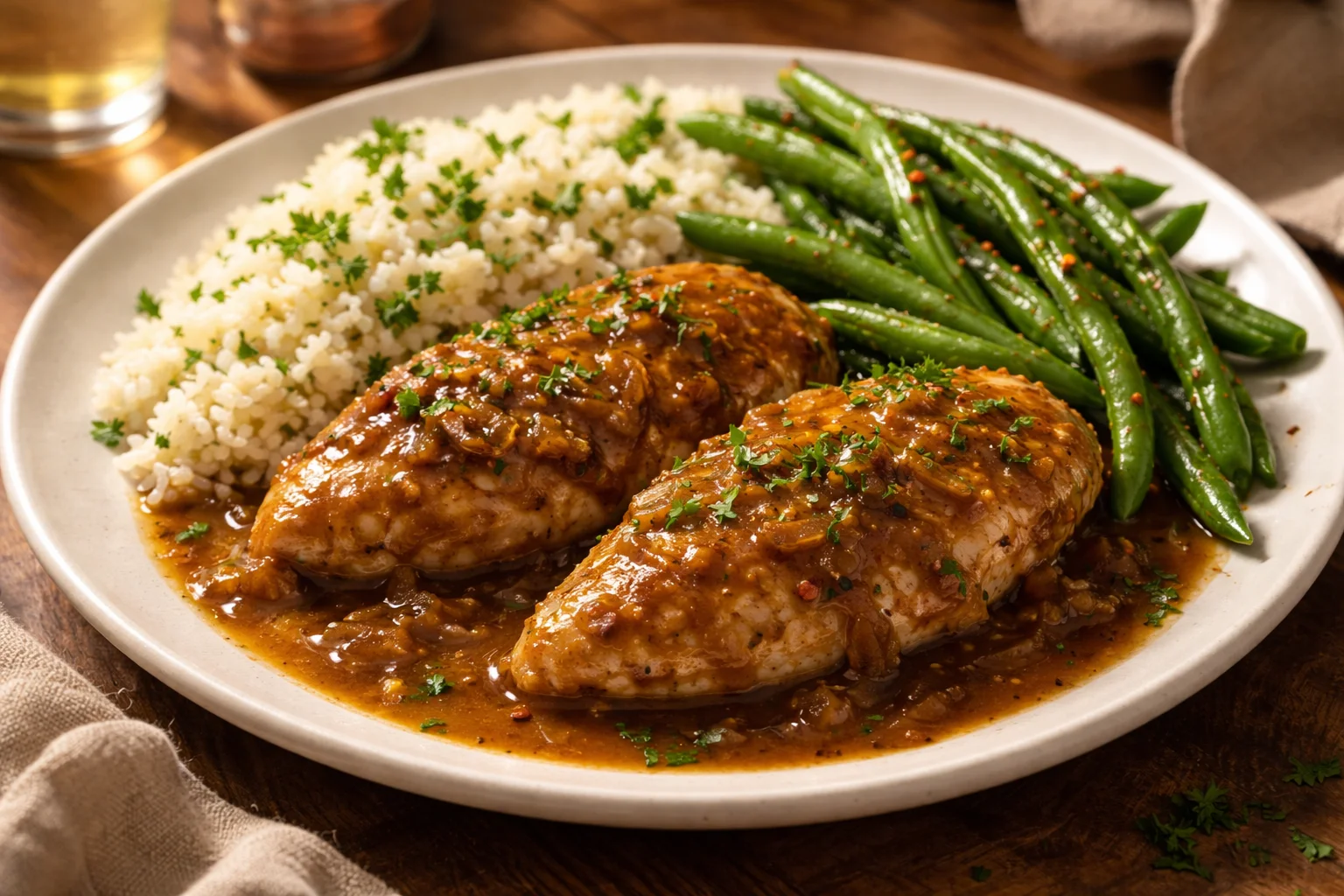
Traditional German Hasenpfeffer (Rabbit Stew)
This is my go to version at home. It is not complicated, but it does ask you for one thing: a little patience. The marinade does a lot of the heavy lifting, and the slow simmer is what gives you that tender rabbit and that deep, dark sauce.
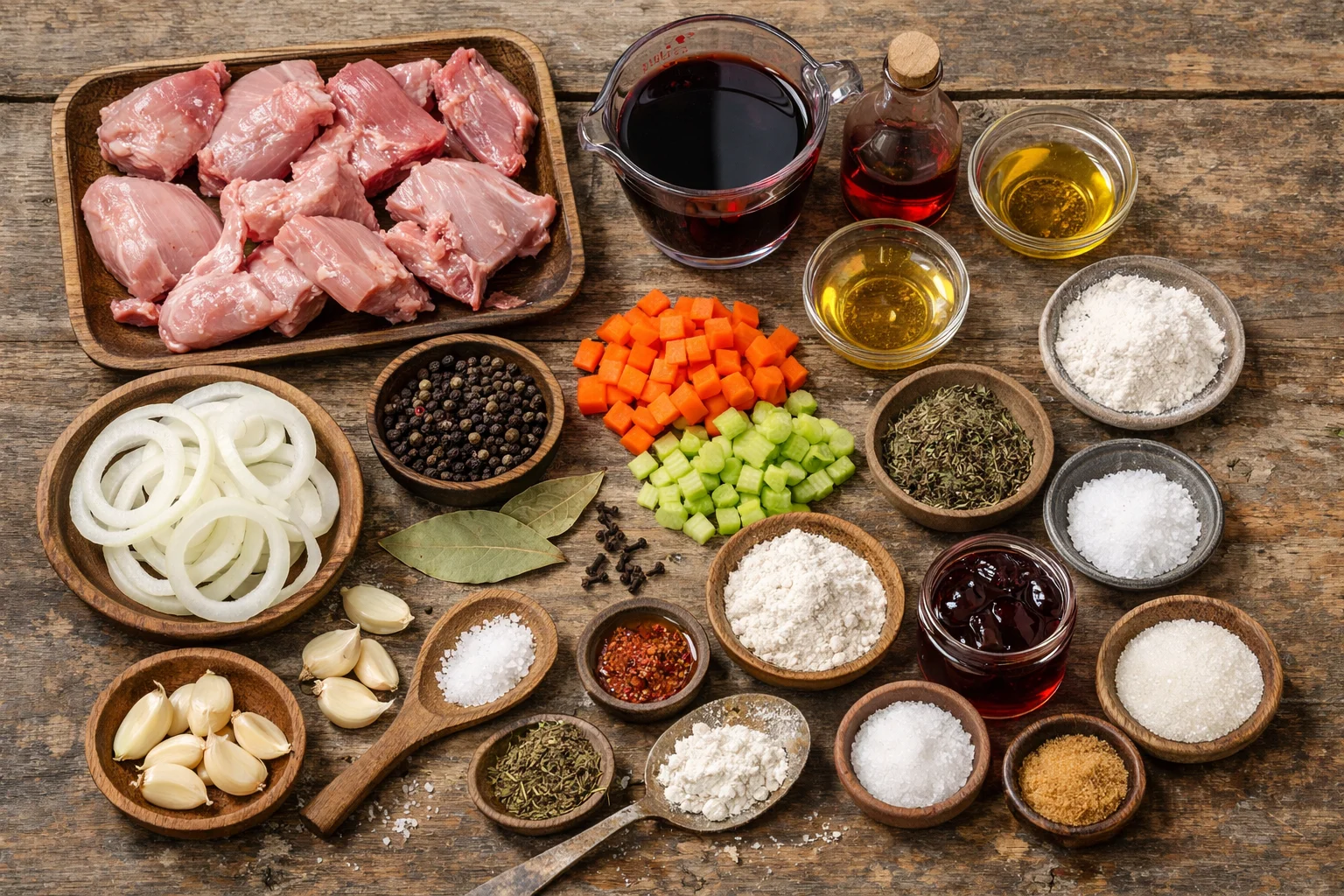
What you will need
- Rabbit, about 2 to 3 pounds, cut into serving pieces
- 2 cups dry red wine
- 1 large onion, sliced
- 2 carrots, chopped
- 2 celery stalks, chopped
- 3 cloves garlic, smashed
- 2 to 3 tablespoons red wine vinegar
- 2 bay leaves
- 8 to 10 whole black peppercorns
- 4 whole cloves (optional but very traditional)
- 1 teaspoon dried thyme or a few sprigs fresh
- 2 to 3 tablespoons flour
- 2 to 3 tablespoons oil or bacon fat
- 2 cups broth (beef or chicken)
- Salt to taste
- 1 to 2 teaspoons sugar or a spoon of jelly (optional, helps balance the tang)
Directions (my real life method)
1) Marinate the rabbit. Put rabbit pieces in a large bowl or zip bag. Add wine, onion, carrots, celery, garlic, vinegar, bay leaves, peppercorns, cloves, and thyme. Make sure the rabbit is mostly covered. Refrigerate at least 8 hours, and overnight is even better.
2) Drain and dry. Take the rabbit out and pat it dry with paper towels. Strain the marinade and keep the liquid and veggies. Do not toss them.
3) Brown the rabbit. Lightly salt the rabbit, then dust with flour. Heat oil or bacon fat in a heavy pot. Brown the rabbit pieces in batches so they actually get color, about 3 to 4 minutes per side. This is where a lot of flavor starts.
4) Cook the vegetables. In the same pot, add the marinated veggies (onion, carrot, celery). Cook 6 to 8 minutes, scraping up the browned bits.
5) Build the stew. Pour in the reserved marinade liquid and bring it to a gentle boil for a minute. Add broth. Put the rabbit back in, along with bay leaves and thyme.
6) Simmer low and slow. Cover and simmer gently for about 60 to 90 minutes, until the rabbit is tender. Check once in a while and keep it at a low bubble, not a hard boil.
7) Taste and balance. Remove bay leaves. Taste the sauce. Add a pinch of sugar or a spoon of jelly if it tastes too sharp. Adjust salt. If you want a thicker sauce, simmer uncovered for 10 minutes, or whisk a tiny bit of flour with water and stir it in.
8) Rest and serve. Let it sit off heat for 10 minutes. It tastes even better the next day, so do not feel weird if you make it ahead.
On the side, I love something simple that soaks up sauce. If you are craving another cozy bowl moment for a different day, this chicken vegetable soup recipe is a great “reset” meal after a rich stew night.
;
I made this for my dad who grew up with German food, and he said the smell alone took him right back to his childhood kitchen. He went quiet for a minute after the first bite, then asked if we had leftovers for tomorrow.
Rabbit or Hare?
This question comes up all the time, and it is a good one. Historically, Hasenpfeffer was often made with hare, which is a bit darker and stronger in flavor than rabbit. Hare also tends to be lean and can be tougher, so the marinating and slow cooking really matters.
In most grocery stores today, you are much more likely to find farmed rabbit. That is totally fine. Rabbit is mild, slightly sweet, and it takes on the marinade beautifully. If you are worried about a “gamey” taste, rabbit is usually the gentler choice.
Here is my quick advice when you are shopping:
- If you are new to this dish, pick rabbit for a more approachable flavor.
- If you have access to hare and love bold game meat, go for it, but keep the simmer gentle and give it time.
- Either way, do not skip the marinade. It is the whole personality of this Hasenpfeffer recipe.
Also, because rabbit is lean, I like using a bit of bacon fat for browning. It adds a subtle smoky note that feels very “stew season” without turning the dish into bacon stew.
Family Tradition
I did not grow up eating rabbit every week or anything like that. For me, Hasenpfeffer was more of a special occasion meal, the kind of dish that showed up when family visited and we wanted something warm and memorable.
The first time I tried making this Hasenpfeffer recipe on my own, I invited a couple friends who are honest eaters. You know the type. If something is dry or bland, their face tells the truth before their mouth does. I was relieved when everyone went back for seconds, and even more relieved when the pot was scraped clean.
Now it has become one of those meals I make when I want to slow life down a notch. I put on music, chop onions, and let the house fill up with that wine and spice smell. It feels grounding. And honestly, it reminds me that old recipes exist for a reason. They are practical, they use time as an ingredient, and they bring people to the table.
If you want to make it feel like a full cozy spread, serve it with mashed potatoes, buttered noodles, or crusty bread. Something that catches that sauce is non negotiable in my opinion.
Wine Pairings for Hasenpfeffer
Because this stew has wine in the pot and that tangy richness in the sauce, wine pairing is pretty forgiving. Still, a good match can make the whole meal feel more put together.
My simple pairing rules:
1) Pick a medium bodied red. Pinot Noir is great. So is a mellow Merlot. You want something that will not bully the spices.
2) If you like white wine, go fuller and slightly richer. A dry Riesling can be surprisingly good, especially if your sauce has a tiny touch of sweetness to balance the vinegar.
3) Cook with what you would drink. It does not need to be expensive, but if it tastes rough in the glass, it will taste rough in the stew.
One more practical tip: if you open a bottle for the stew, pour a small glass right away. The cook deserves a sip, and it is a nice way to check the flavor direction of the dish as it simmers.
Common Questions
Can I make Hasenpfeffer ahead of time?
Yes, and I actually recommend it. This Hasenpfeffer recipe tastes better the next day because the sauce settles and the flavors blend. Just cool it, refrigerate, and reheat gently.
What can I use if I cannot find rabbit?
Chicken thighs are the easiest substitute for the vibe, though it will not be traditional. If you go that route, still do the marinade, and start checking tenderness a bit earlier.
How do I keep rabbit from getting dry?
Keep the simmer gentle and do not rush it. Rabbit is lean, so high heat can make it tighten up. Also, do not skip browning, but do not overbrown either.
Do I have to add cloves and peppercorns?
No, but they are part of that classic flavor. If cloves are not your thing, use fewer, like one or two. Peppercorns add warmth without making it spicy.
How should I store leftovers?
Keep leftovers in the fridge in a sealed container for up to 3 days. It also freezes well for about 2 months. Thaw overnight and reheat slowly so the sauce stays smooth.
A cozy pot you will be proud of
If you have been curious about making a real deal Hasenpfeffer recipe, I hope this helps you feel ready to jump in. It is hearty, comforting, and honestly kind of fun because it feels different from the usual weeknight rotation. For extra inspiration and another take on the classic, I like reading Hasenpfeffer German Wine Braised Rabbit – LindySez | Recipes and Hasenpfeffer (German Rabbit Stew) – Days of Jay when I am in the mood to compare little tweaks. Grab a bottle you actually want to drink, let the marinade do its work, and give the pot time to simmer into something special. When you serve it and see people go quiet for that first bite, you will get exactly why this old German stew sticks around.