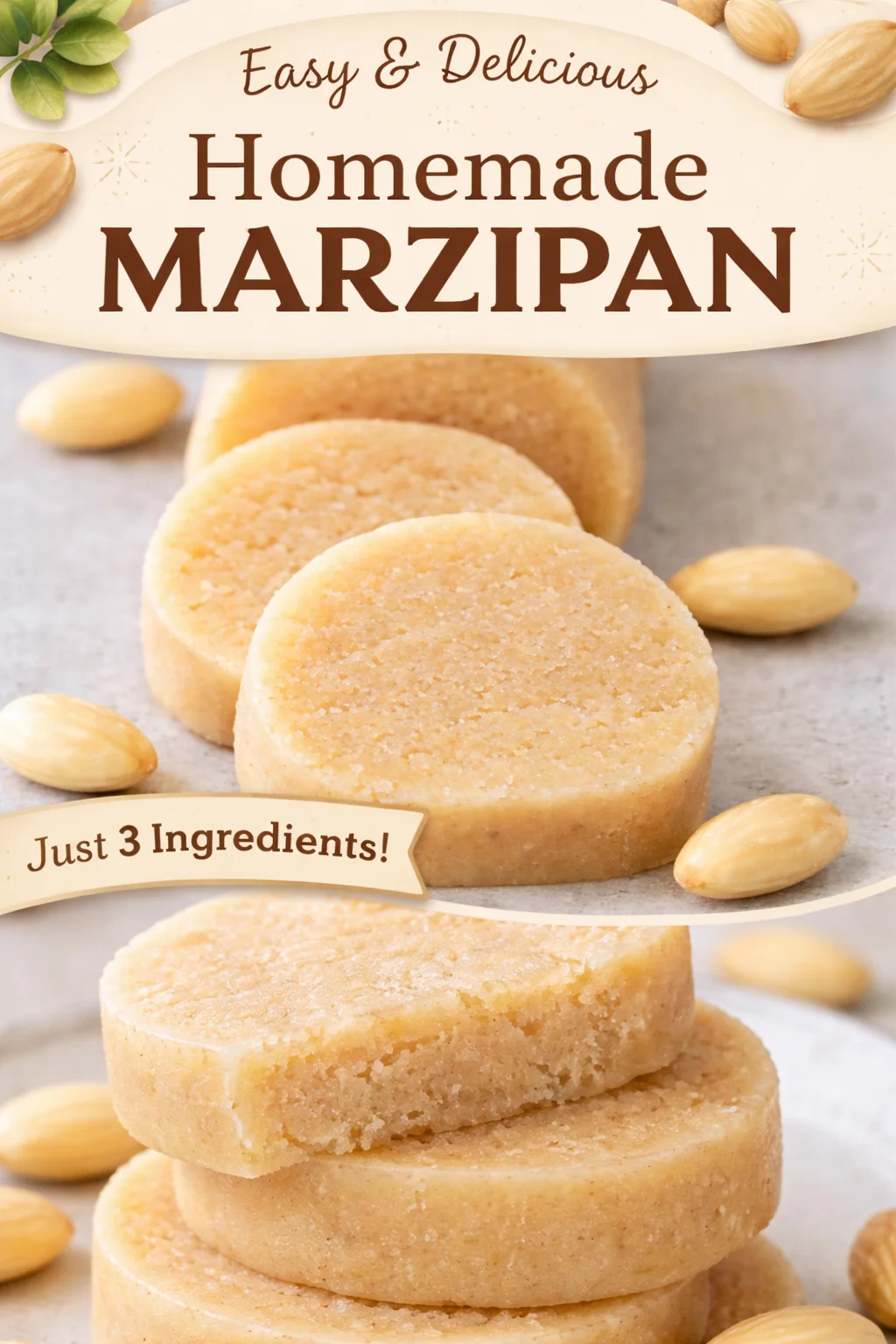
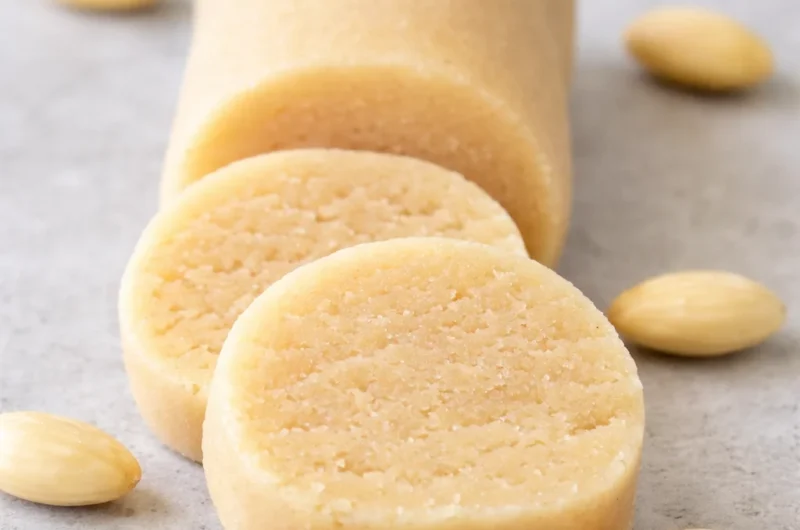
Traditional German Marzipan Recipe (Homemade Almond Paste) is one of those things I used to assume only fancy bakeries could pull off. Then the holidays rolled around, I wanted that classic almond sweetness for cookies, and suddenly I was staring at pricey store bought logs in the baking aisle. If you have ever done the same, you are in the right place. This is my go to way to make it at home with simple ingredients and zero stress. It tastes rich, soft, and almondy in the best way, and it makes your kitchen smell like something special is happening. 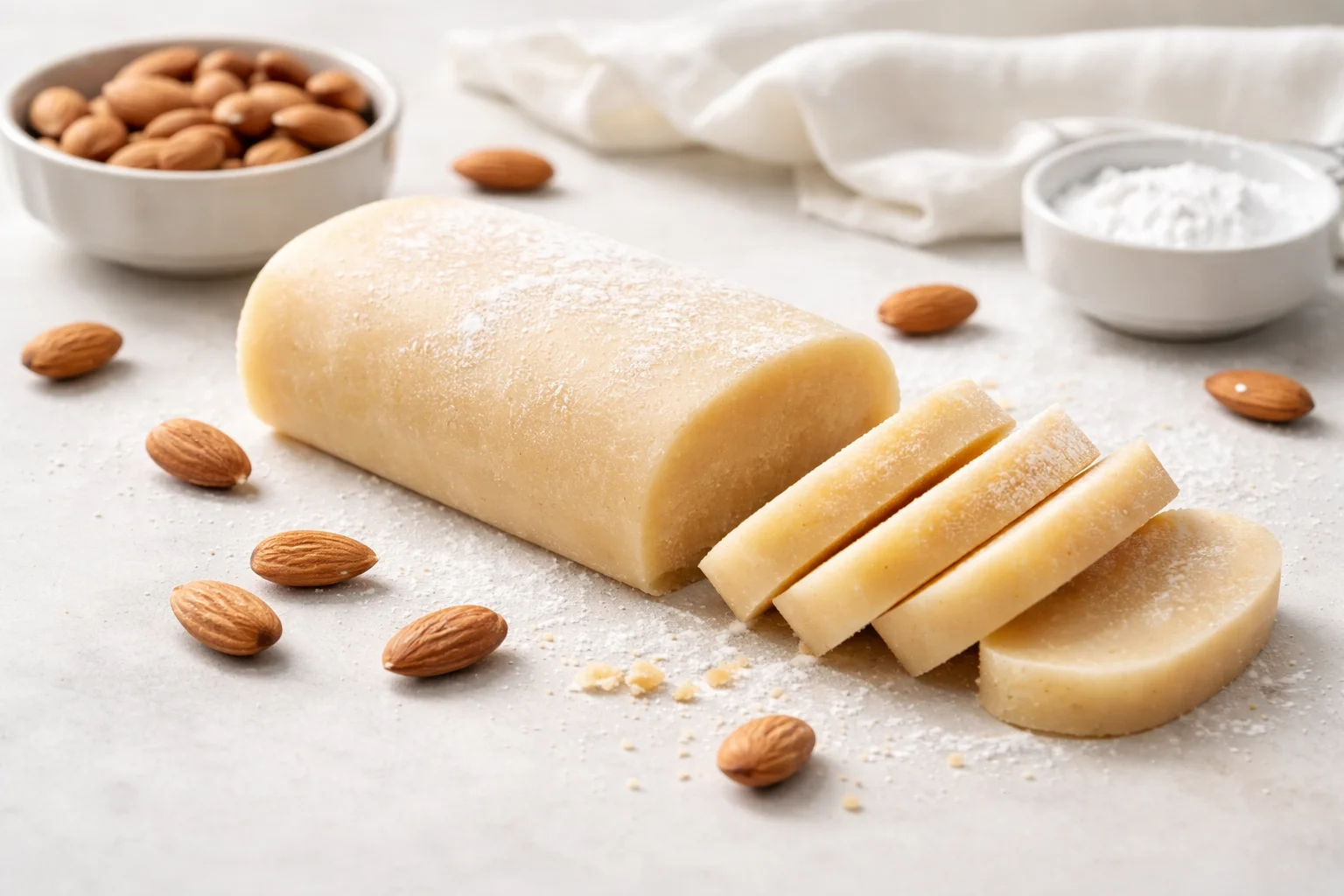
What is Marzipan?
Marzipan is a sweet almond mixture that you can roll, shape, and use in all kinds of desserts. In Germany, it shows up everywhere around Christmas, especially in cookies, stollen, and little chocolate covered marzipan bars. It is smooth, slightly chewy, and tastes like almonds with a gentle sweetness.
Traditional German marzipan usually leans on high quality almonds and a balanced amount of sugar. That is why it tastes more almond forward than some super sweet versions you might have tried. When I make this at home, I focus on getting a soft dough that is easy to work with, because if it is too dry you will fight it, and if it is too wet it gets sticky fast.
If you are into classic comfort foods too, you might like browsing this collection of German recipes. It always gives me ideas for what to pair with dessert when I am doing a themed dinner.
Marzipan vs. Almond Paste
This is where people get confused, and honestly I did too at first. Both are made from almonds and sugar, but they are not always the same thing in the store.
The quick, practical difference
In many kitchens:
- Marzipan is sweeter and smoother, made for covering cakes, shaping little fruits, or dipping in chocolate.
- Almond paste is less sweet and a bit coarser, often used as a baking ingredient in fillings and batters.
But here is the good news. For most home baking, you can make one base recipe and adjust the sweetness and texture. That is what I do. If I know I am shaping decorations, I add a touch more powdered sugar for a smoother, firmer feel. If I am baking it into something, I keep it a bit less sweet.
Also, if you are building a cozy menu, I like serving something warm and simple before dessert. This chicken vegetable soup is one of my favorites when it is cold outside.
How to Make Marzipan
This is the part that always surprises people. Traditional German marzipan at home is basically mix, knead, rest, and you are done. No fancy tools required. I usually make it in one bowl, and I keep a tiny bit of extra powdered sugar nearby just in case.
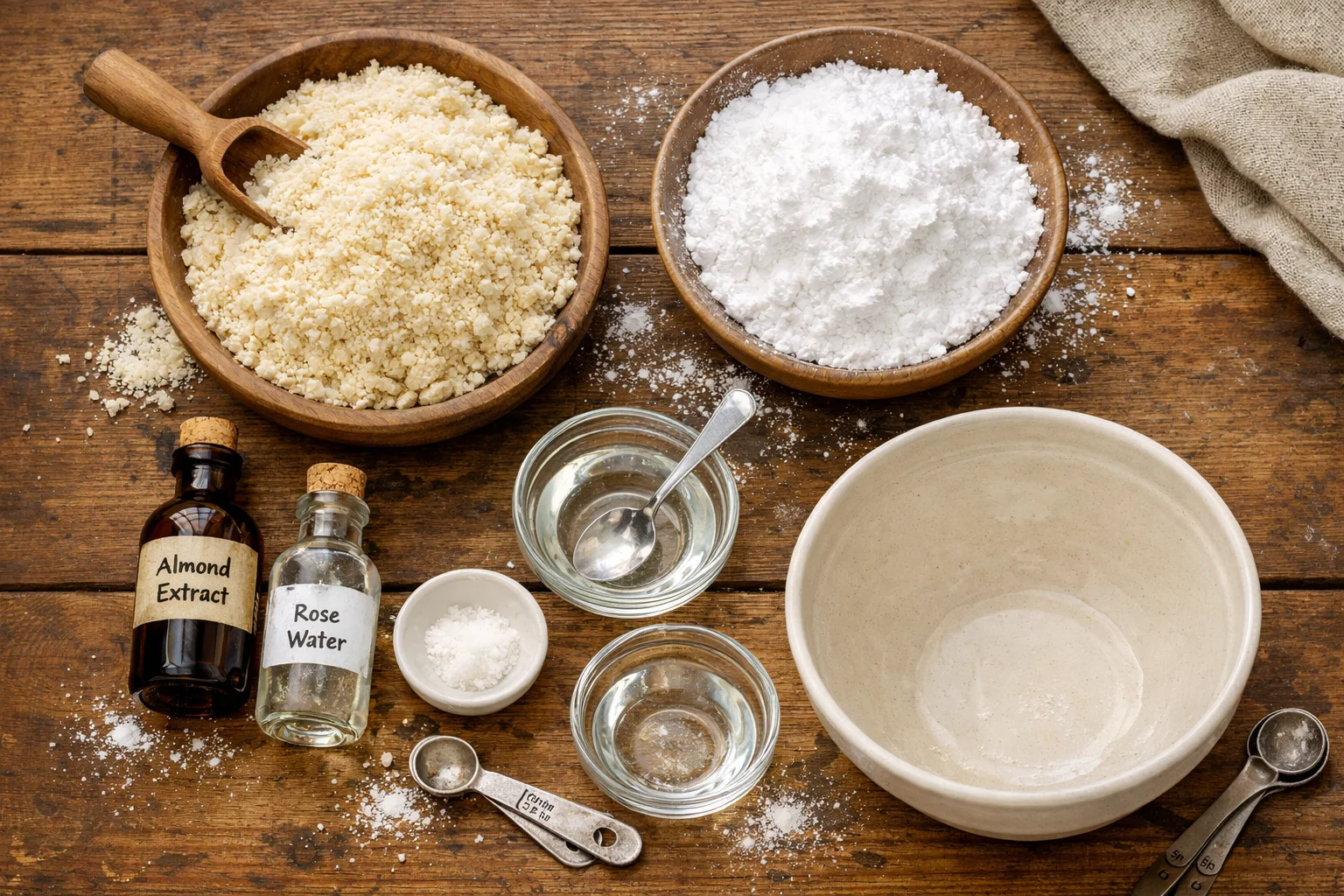
Ingredients and what you will need
- 2 cups finely ground blanched almonds or almond flour
- 1 1/2 cups powdered sugar, plus extra for dusting
- 1 to 2 teaspoons almond extract (optional but very helpful)
- 1 teaspoon rose water or orange blossom water (optional, use lightly)
- 2 teaspoons light corn syrup or honey (helps with smoothness)
- 2 to 4 tablespoons water (add slowly)
- Pinch of salt
;
Step by step directions
1) In a large bowl, mix the almond flour, powdered sugar, and salt.
2) Add almond extract, and if you are using it, add the rose water or orange blossom water. Keep those floral waters light. A little goes a long way and can taste soapy if you overdo it.
3) Add the corn syrup or honey. Stir until the mixture looks a bit clumpy.
4) Add water one tablespoon at a time. After each addition, stir and then use clean hands to knead. You want a soft dough that holds together and feels like play dough. If it cracks, add a few drops more water. If it feels sticky, dust in a bit more powdered sugar.
5) Knead for about 2 to 3 minutes until smooth. Then wrap tightly in plastic wrap and let it rest at room temperature for 30 minutes. Resting makes it easier to roll and shape.
That is it. You just made Traditional German marzipan, and your future baking self is going to be very grateful.
“I tried this on a Sunday afternoon and it actually worked on the first try. The texture was smooth, and my kids shaped little hearts and stars. It tasted like the marzipan my Oma used to buy in Germany.”
Storage tips from my kitchen: wrap it tight, then place it in a sealed container. It keeps about 2 weeks in the fridge. For longer storage, freeze it for up to 3 months, then thaw in the fridge overnight.
Recipe Variations
Once you have the base down, you can tweak it depending on what you are making. This is where homemade really wins, because you can make it taste exactly how you want.
Here are a few simple variations I use:
Chocolate marzipan: Knead in 1 to 2 tablespoons cocoa powder. You may need an extra teaspoon of water to balance dryness.
Pistachio twist: Swap out 1/3 cup of the almonds for finely ground pistachios. The color is pretty and the flavor is mellow.
Extra smooth version: Sift your almond flour first, and knead a little longer. Add a tiny bit more syrup if it feels crumbly.
Lower sweetness for baking: Reduce powdered sugar by about 1/4 cup. It will be less candy like and more of a baking paste.
If you end up with a sweet tooth kind of night after making marzipan, I also love a homey dessert like this cranberry crisp. It is tart, warm, and super easy.
How to Use Marzipan
This is the fun part because Traditional German marzipan is basically a multitool for dessert. It can be the star of the show or a quiet little helper inside your baking.
My favorite ways to use it
1) Shape and dip: Roll into small balls, chill them for 20 minutes, then dip in melted dark chocolate. This is the fastest fancy treat I know.
2) Fill cookies: Roll thin ropes and tuck them into cookie dough. It bakes into a soft almond center.
3) Make quick little fruits: Tint small pieces with food coloring and shape into tiny apples, pears, or oranges. Dust with a little cocoa or cinnamon for depth.
4) Cake and pastry layer: Roll it between two pieces of parchment paper dusted with powdered sugar. Lay it on a cake like a simple cover, or tuck a thin sheet inside layers for an almond surprise.
5) Sweet toast situation: This is not traditional, but I love a thin smear on toast with a few sliced strawberries. It is like dessert breakfast, no regrets.
One quick heads up: if you are coloring it, gel food coloring works better than the watery kind because it does not make the dough sticky.
Common Questions
Why is my marzipan crumbly?
It usually needs a little more moisture. Add water a few drops at a time and knead again. Also make sure your almond flour is finely ground.
Why is it sticky?
You probably added too much water. Knead in a bit more powdered sugar, then let it rest for 10 minutes. Resting helps it settle.
Can I make this without almond extract?
Yes. It will still taste like almonds, just a bit more mild. If you have rose water or orange blossom water, use only a tiny splash to boost flavor.
Is marzipan safe to eat without cooking?
Yes, as long as your ingredients are fresh and you store it properly. This is basically a no bake sweet dough.
Can I freeze it?
Absolutely. Wrap it tight, seal it in a freezer bag, and freeze up to 3 months. Thaw in the fridge overnight, then knead briefly to bring it back.
A sweet little wrap up before you start
If you have been wanting to try Traditional German marzipan without the store bought price tag, this is your sign. Keep it simple, add water slowly, and trust the kneading because the texture really does come together. If you want to compare notes or see other approaches, I like reading Homemade Marzipan (Almond Paste) – The Daring Gourmet and Best Marzipan Recipe (Almond Paste) – Elavegan when I am in a baking mood. Now go make a batch, sneak a little taste, and save some for cookies because it somehow disappears fast in my house.