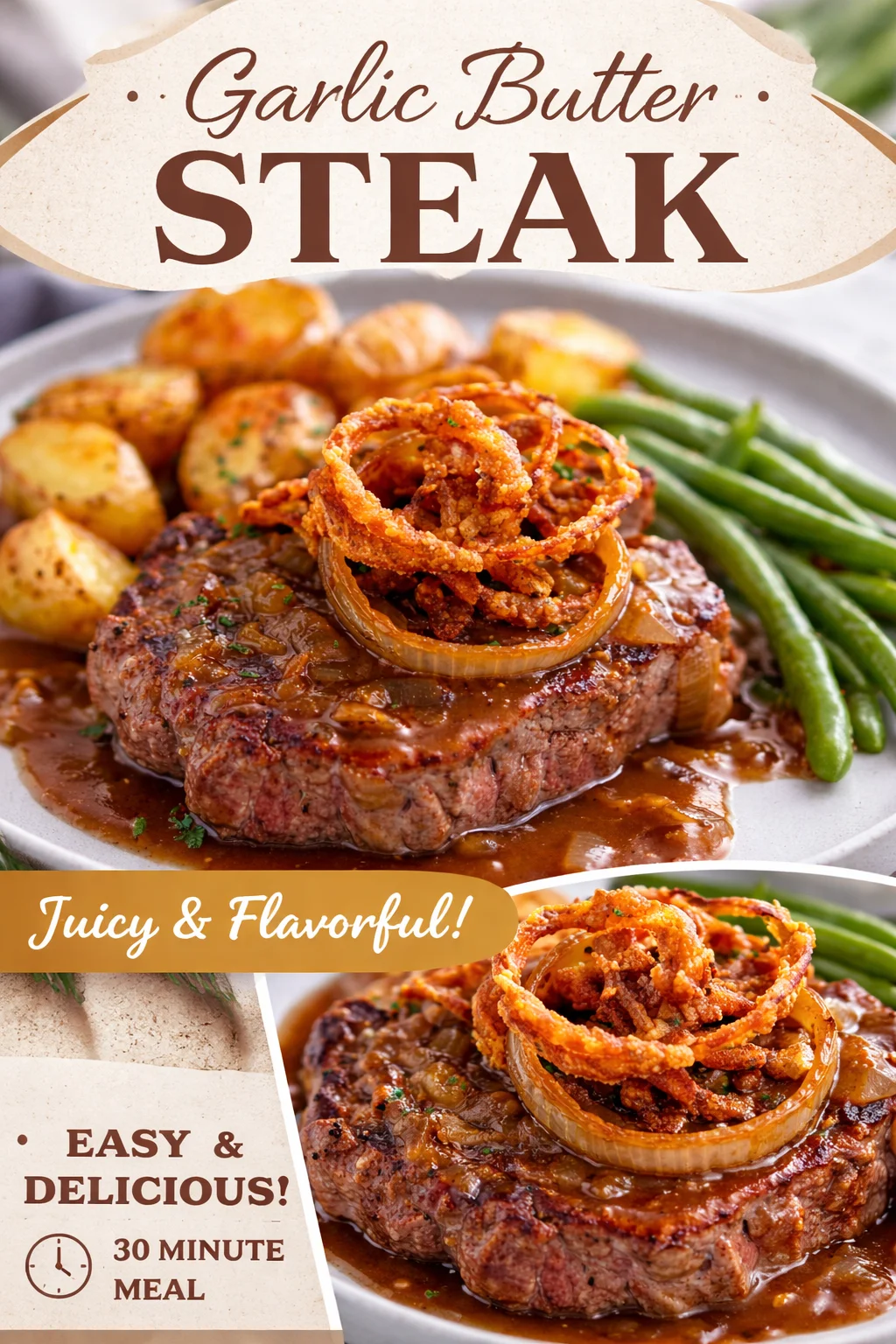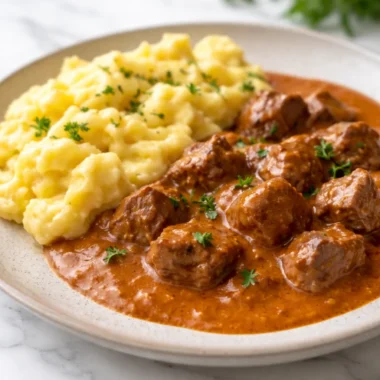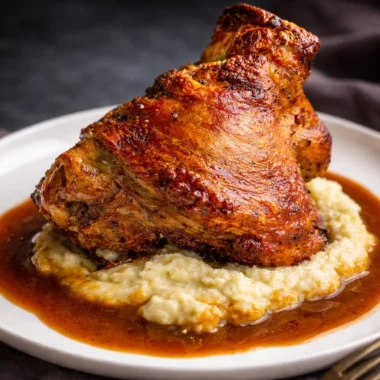
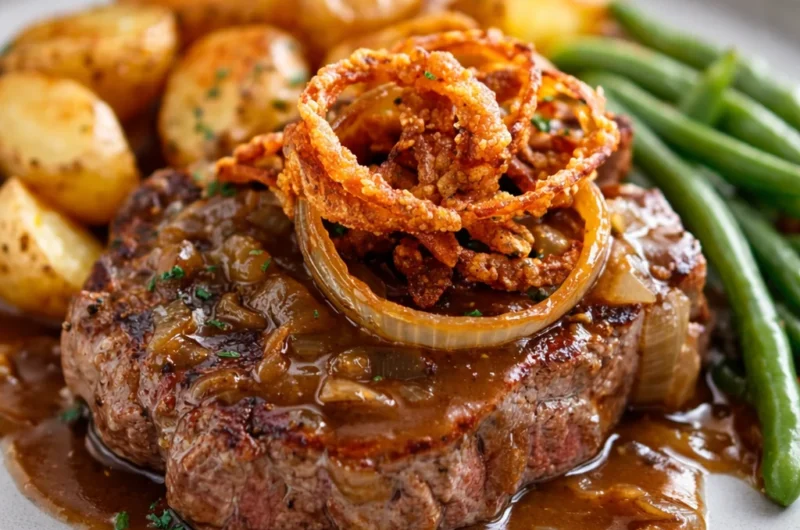
Traditional Zwiebelrostbraten (German Onion Beef Roast) is one of those dinners I make when everyone’s hungry, a little cranky, and I need something that feels special without turning my kitchen into a disaster zone. You know that mood where you want comfort food, but you also want it to look like you tried? This is that meal. It’s beefy, saucy, and topped with a ridiculous amount of crispy onions that make the whole thing smell like a cozy German tavern. The best part is that it’s totally doable at home if you keep the steps simple and don’t rush the onions. 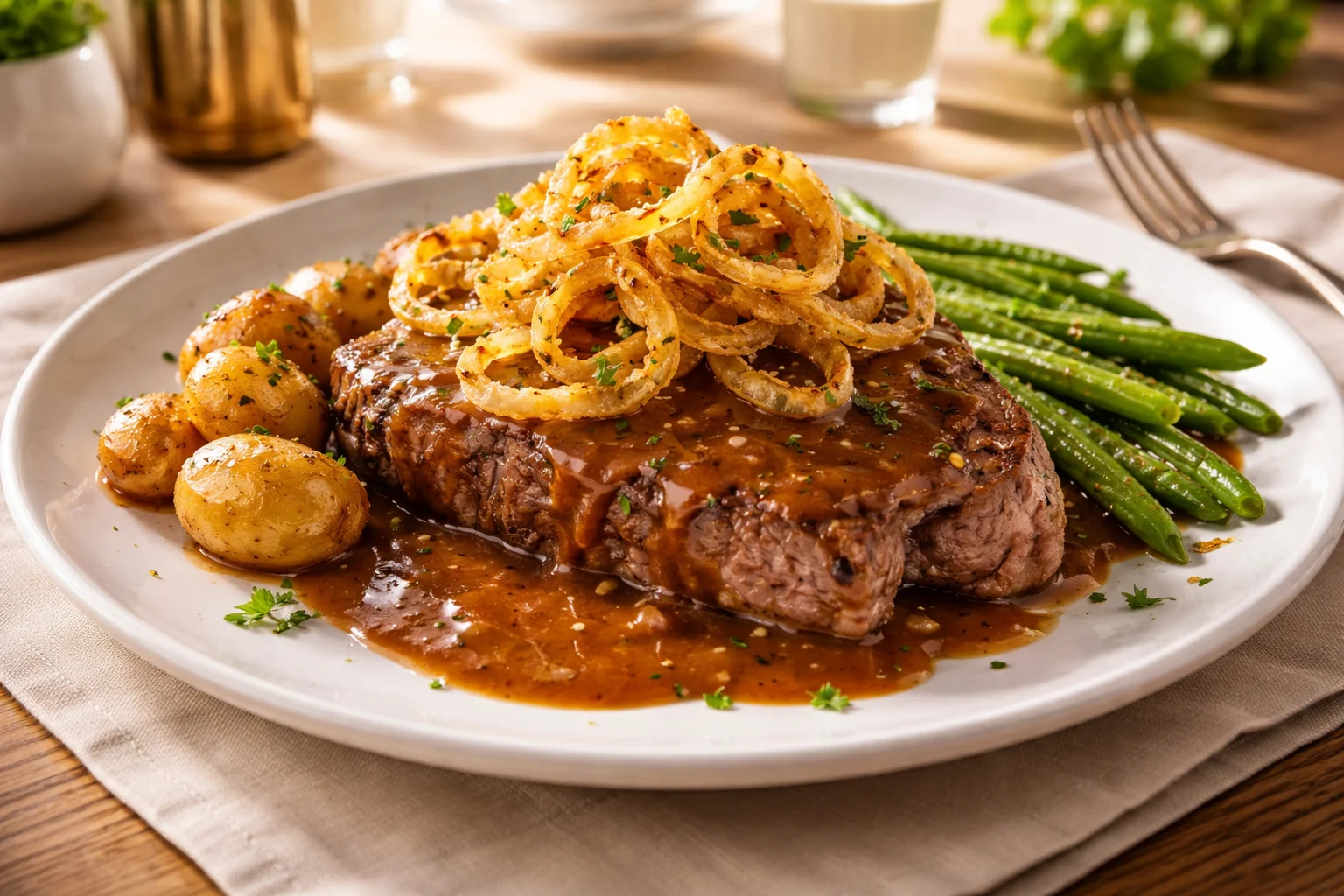
What is Zwiebelrostbraten?
Zwiebelrostbraten is basically a pan seared beef steak or roast style cut, served with a rich brown sauce and a mountain of fried onions on top. The name gives it away: zwiebel means onion, and rostbraten points to roasted or browned beef. When I say it out loud, it sounds fancy, but the vibe is very homey.
In my kitchen, I treat it like a comfort classic. I focus on three things: a good beef cut, deep onion flavor, and a sauce that tastes like it took all day even if it didn’t. If you’re someone who loves onion forward dishes, this is your kind of meal. And if you’re not, well, the onions are crispy and mellow here, not sharp and aggressive.
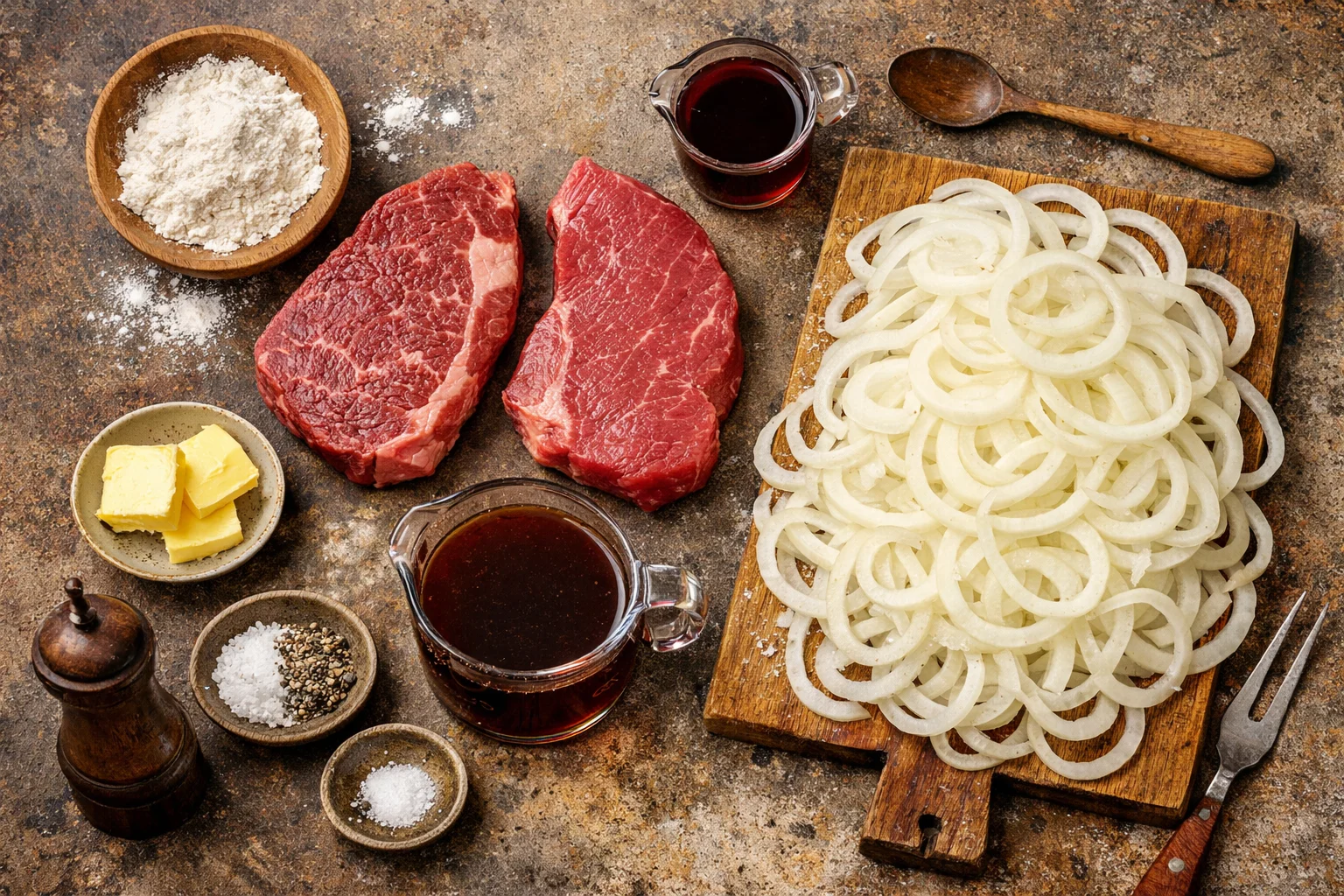
My quick “what you need” checklist
- Beef: rump steak, sirloin, or a similar tender steak
- Onions: lots of them, sliced thin
- Flour: a light dusting for onions and to help the sauce
- Beef stock: good quality, since it carries the sauce
- Butter or oil: for frying onions and searing beef
- Vinegar or a splash of wine: for that little tang
- Salt and pepper: and I like a tiny pinch of sugar for the onions
If you want an easy side dish night with beef that still feels cozy, I also keep recipes like this creamy beef pasta dinner in my back pocket for busy weeks. Totally different vibe, but same comfort-food satisfaction.
Historical Background
I’m not going to pretend I learned Traditional Zwiebelrostbraten (German Onion Beef Roast) from a culinary school or anything. I first ate it while traveling in southern Germany, where it shows up in restaurants as a “house specialty,” usually with Spätzle and something pickled on the side. It felt like the kind of dish that’s been ordered for generations, especially on weekends or family outings.
The roots of this dish are tied to old school regional cooking where you make a little meat go a long way by building a strong sauce and serving it with filling sides. Onions were cheap, easy to store, and they made everything taste richer. So it makes sense that fried onions became the signature topping instead of just a garnish.
What’s cool is how consistent it is, even when it changes a bit from place to place. Some versions add mustard to the sauce, some use a bit of red wine, and some cooks swear by using drippings from a roast instead of a quick pan sauce. But the heart of it stays the same: browned beef, onion flavor, and comfort.
The Perfect Combination: Beef, Spätzle, Roast Sauce and Fried Onions
This is the part where everything comes together, and honestly, where most people mess it up. Not because it’s hard, but because it’s tempting to rush. The onions need patience. The beef needs confidence. And the sauce needs a little attention so it doesn’t taste watery.
How I make it at home (simple and realistic)
Step 1: Start with the onions. Slice them thin. Toss with a little flour and a pinch of salt. Heat oil and a small knob of butter in a pan and fry them slowly. Not blazing hot. You want them golden and crisp, not burned. I pull them out and park them on paper towels, then I try not to eat half of them “for quality control.”
Step 2: Sear the beef. Salt and pepper both sides. Use the same pan if you can, because those browned bits matter. Sear the beef hot and quick, then lower the heat and cook to your preferred doneness. If you’re nervous, go a bit under because it can rest while you make the sauce.
Step 3: Make the roast sauce. Add a small spoon of flour to the pan drippings if needed, then pour in beef stock while scraping the bottom. Add a splash of vinegar or wine for brightness. Let it simmer until it coats a spoon. Taste it and adjust with salt and pepper. If it tastes flat, it usually needs either a pinch of salt or a tiny bit of acid.
Step 4: Serve like you mean it. Beef on the plate, sauce over it, then pile on those fried onions. When I’m doing it properly, I serve it with Spätzle, because they catch the sauce in all the right ways.
About Spätzle: you can make it from scratch, but I won’t judge anyone for buying it. If you’re cooking Traditional Zwiebelrostbraten (German Onion Beef Roast) on a weeknight, store bought Spätzle is still a win. I usually butter it lightly and add a pinch of salt. That’s it. The sauce does the heavy lifting.
And yes, the combo matters. Beef gives you the savory base, Spätzle brings comfort, roast sauce ties it together, and the fried onions add crunch and sweetness. It’s like the four person band where everyone actually shows up and plays their part.
“I tried your onion tip about keeping the heat medium and it made all the difference. My onions were crisp, not bitter, and my family said it tasted like a restaurant plate.”
One more thing: if you love that beef plus onion thing in other forms, you’d probably also be into these savory French onion meatballs. Similar comfort notes, totally different dinner.
The Cultural Significance of Zwiebelrostbraten
To me, Traditional Zwiebelrostbraten (German Onion Beef Roast) feels like a “gather around the table” kind of dish. It’s not fussy, but it’s generous. The portion sizes are usually hearty, and the flavors are bold in a way that makes people talk less and eat more. That’s always a good sign.
In Germany, especially in the south, it’s the kind of meal you might order when you want something solid and traditional. It also shows up at family celebrations because it pleases a wide range of people. Kids can skip the onions if they’re picky, sauce lovers can drown their Spätzle, and beef fans get their moment.
At home, I like making it when I want to serve something that feels like a treat without doing a complicated menu. It’s also a nice reminder that some of the best meals aren’t trendy. They’re classics because they work.
Where to Find Authentic Zwiebelrostbraten?
If you want the real deal experience before cooking it yourself, look for German restaurants that focus on Swabian or Bavarian style dishes. Zwiebelrostbraten is especially common in Baden Württemberg, and many places serve it as a signature plate with Spätzle and a salad.
Here are a few tips I use when I’m scanning a menu or deciding if a place might do it well:
- They mention Spätzle as the standard side, not an afterthought
- The onions are described as fried or crispy, not just sautéed
- The sauce is clearly a beef based pan sauce, not gravy from a packet
- The menu has other regional classics like Maultaschen or schnitzel
If you’re ordering it out, don’t be shy about asking how they cook the beef. Some places serve it more like a steak, others more like a roast style portion. Both can be great, but it helps to know what you’re getting.
Common Questions
What cut of beef works best for Zwiebelrostbraten?
I like sirloin or rump steak because they stay tender with quick cooking. If you go too lean and cook it too long, it can get chewy. If you go too thin, it can overcook before you get a good sear.
Can I make the fried onions ahead of time?
Yes, and it’s a smart move. Fry them earlier in the day and keep them on paper towels. Re crisp them in the oven for a few minutes if needed, but don’t cover them tightly or they’ll soften.
How do I keep the sauce from tasting bland?
Use decent beef stock, and don’t skip the little splash of vinegar or wine. Also, scrape up the browned bits from the pan. That’s where the flavor lives.
What do I serve with it besides Spätzle?
Roasted potatoes, mashed potatoes, or even egg noodles work. I also like a simple green salad with a sharp dressing to cut the richness.
Is Traditional Zwiebelrostbraten (German Onion Beef Roast) hard to cook for guests?
Not really, but do the onions first and keep them ready. Then you can focus on the beef and sauce right before serving, which keeps everything tasting fresh.
A cozy plate you’ll want to make again
If you’ve been craving something hearty, Traditional Zwiebelrostbraten (German Onion Beef Roast) is honestly such a satisfying one to try. It’s simple food done with care, and it tastes like way more effort than it really is once you get your onion timing down. If you want to compare another homestyle German roast story, I love Culinary Legacy: My Mother’s Rindsbraten Beef Roast for that warm, family kitchen feel. And if you’re curious about regional details and a more traditional approach, Traditional Allgäuer Zwiebelrostbraten – Cooking The World is a great read alongside your cooking plan. Make it once, pile the onions high, and don’t be surprised if this becomes your new comfort dinner favorite.