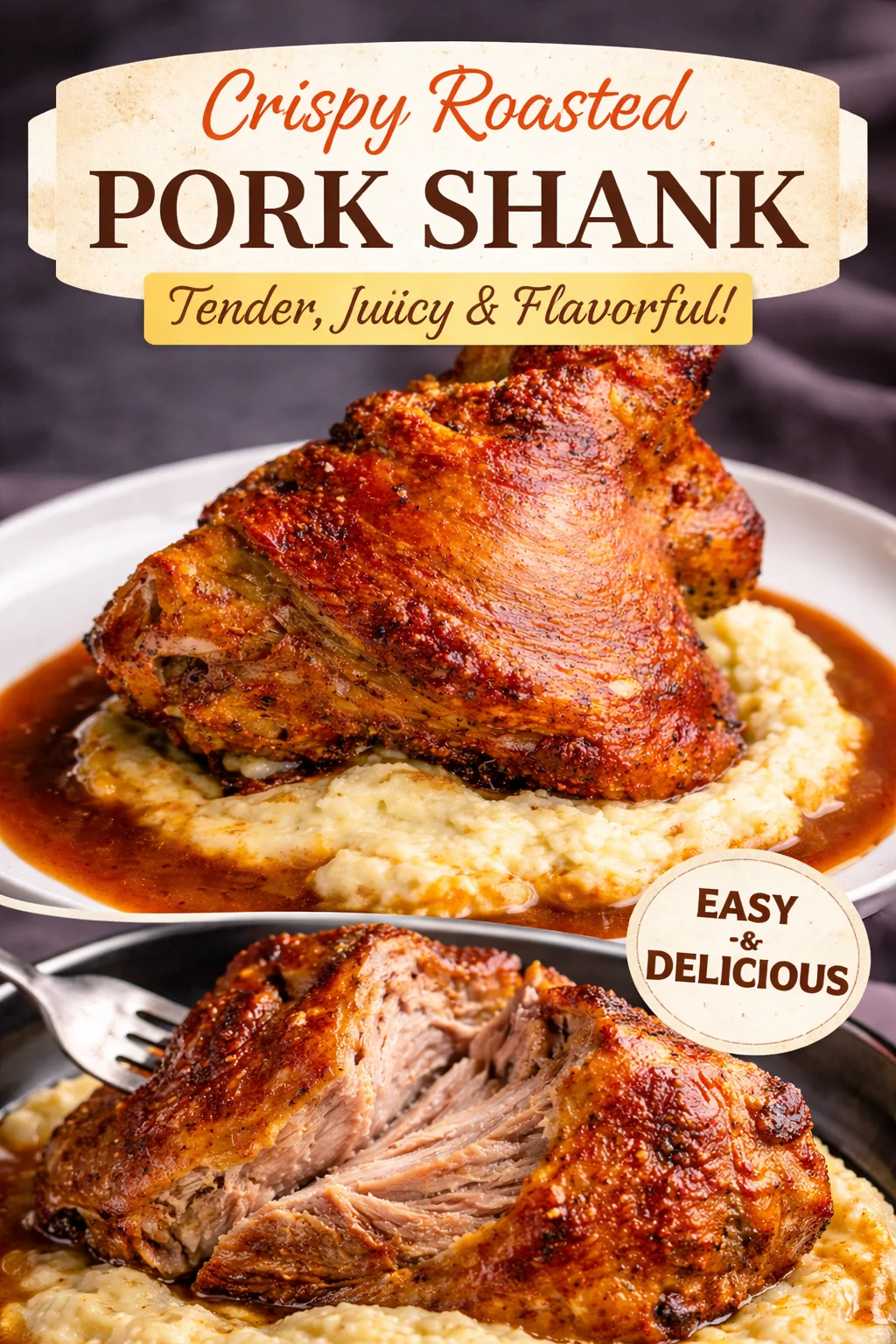
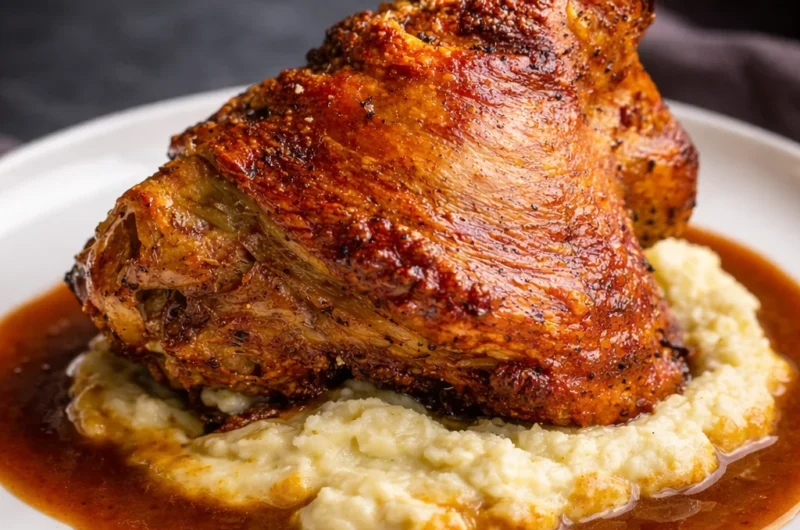
Traditional German Pork Knuckle Recipe – Schweinshaxe is one of those meals I make when I want the house to smell amazing and I do not mind waiting a bit for something truly worth it. Maybe you have had it at a German restaurant and thought, how do they get that skin so crunchy and the meat so soft. Or maybe you bought a pork hock on a whim and now it is sitting in your fridge like a dare. I have been there, and this is the cozy, reliable way I make it at home. You do not need fancy tools, but you do need a little patience and a hot oven. 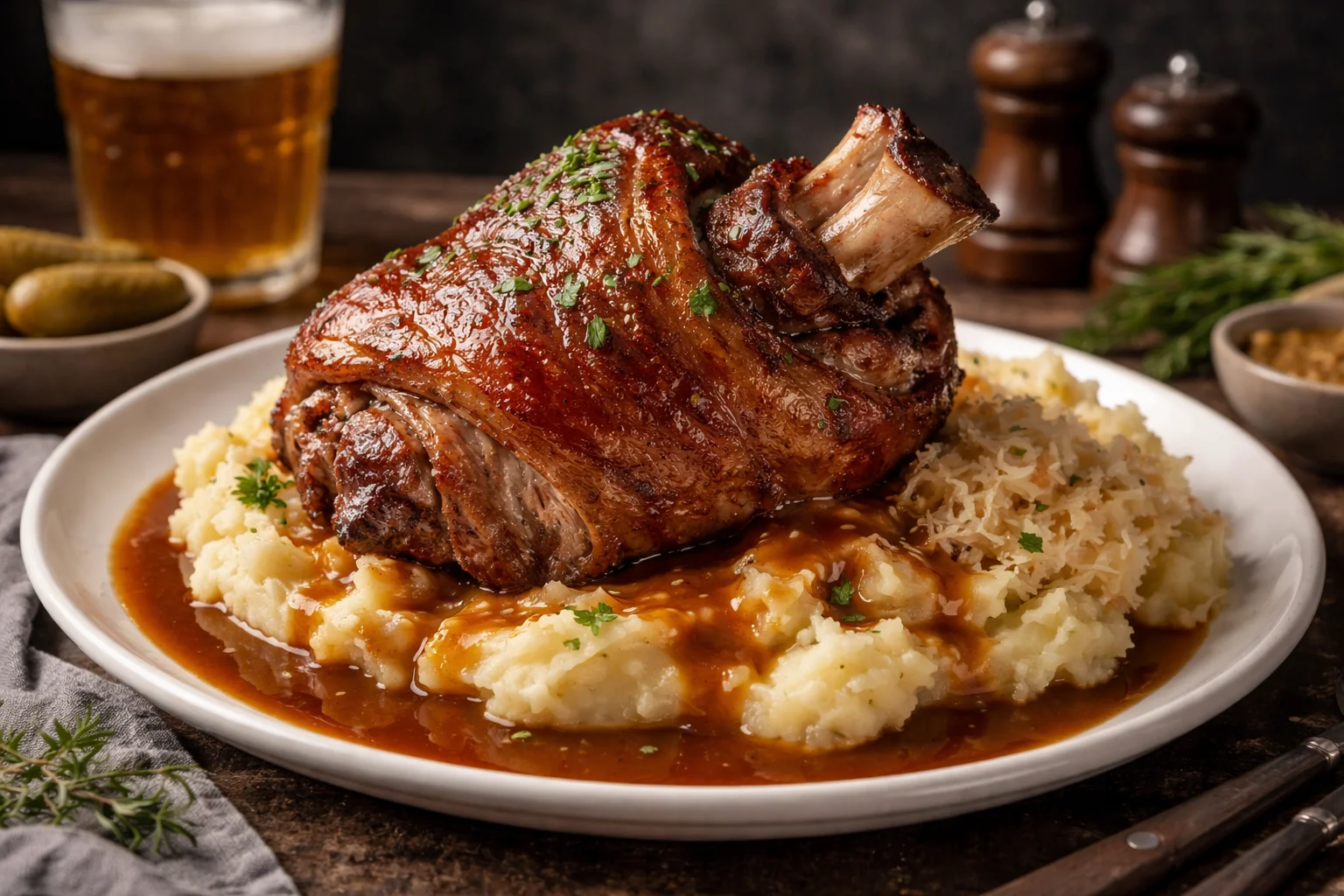
What is a pork hock?
A pork hock is the lower part of the pig’s leg, basically the ankle area. You might see it labeled as pork knuckle, pork shank, or hock. It is a tougher cut with lots of connective tissue, which sounds scary until you remember what low and slow cooking does to tough cuts. It turns them into something juicy and tender that tastes like you worked way harder than you did.
For Traditional German Pork Knuckle Recipe – Schweinshaxe, you are usually using the rear hock because it is meatier. The front hock is smaller and often used more for soups and beans, but you can cook it the same way if that is what you find.
Here is what I look for at the store:
- Skin on, because the crackly skin is half the joy
- About 2 to 3 pounds per hock, give or take
- Not overly smoked (unless you want a different flavor)
If you are curious about other cozy classics, I keep a running list of favorites in my German recipes collection. It is where I go when I want comfort food that feels like a little trip without leaving the kitchen.
;
How to make pork knuckle skin crispy
This is the part everyone worries about, and honestly it is the part that makes people think you have secret restaurant powers. Crispy skin is not hard, but it is picky. Moisture is the enemy, and heat at the right time is your best friend.
My simple crispy skin checklist
Before you even think about blasting the oven, do these steps:
- Dry the skin really well with paper towels.
- Score the skin in a crosshatch pattern. Cut through the skin and fat, but try not to slice deep into the meat.
- Salt the skin generously. Salt pulls out moisture and helps blistering.
- Let it sit uncovered in the fridge for a few hours, or overnight if you can. This helps dry the skin even more.
When it is time to cook, you usually do a slow roast first to tenderize the meat, then finish with high heat to crisp the skin. If your oven has a convection setting, that helps, but it is not required.
My little personal tip: if the skin is not crisping at the end, do not panic and carve it right away. Give it another 10 minutes at higher heat and watch closely. It can go from pale to perfect fast, and yes, it can also go from perfect to too dark fast.
How to cook ham hocks Step by Step
Even though we are talking about Schweinshaxe, the method is very similar to cooking ham hocks. The big idea is the same: long cook to soften and render, then a hot finish if you want crispy skin. Here is exactly how I do my Traditional German Pork Knuckle Recipe – Schweinshaxe at home.
Ingredients and what you will need
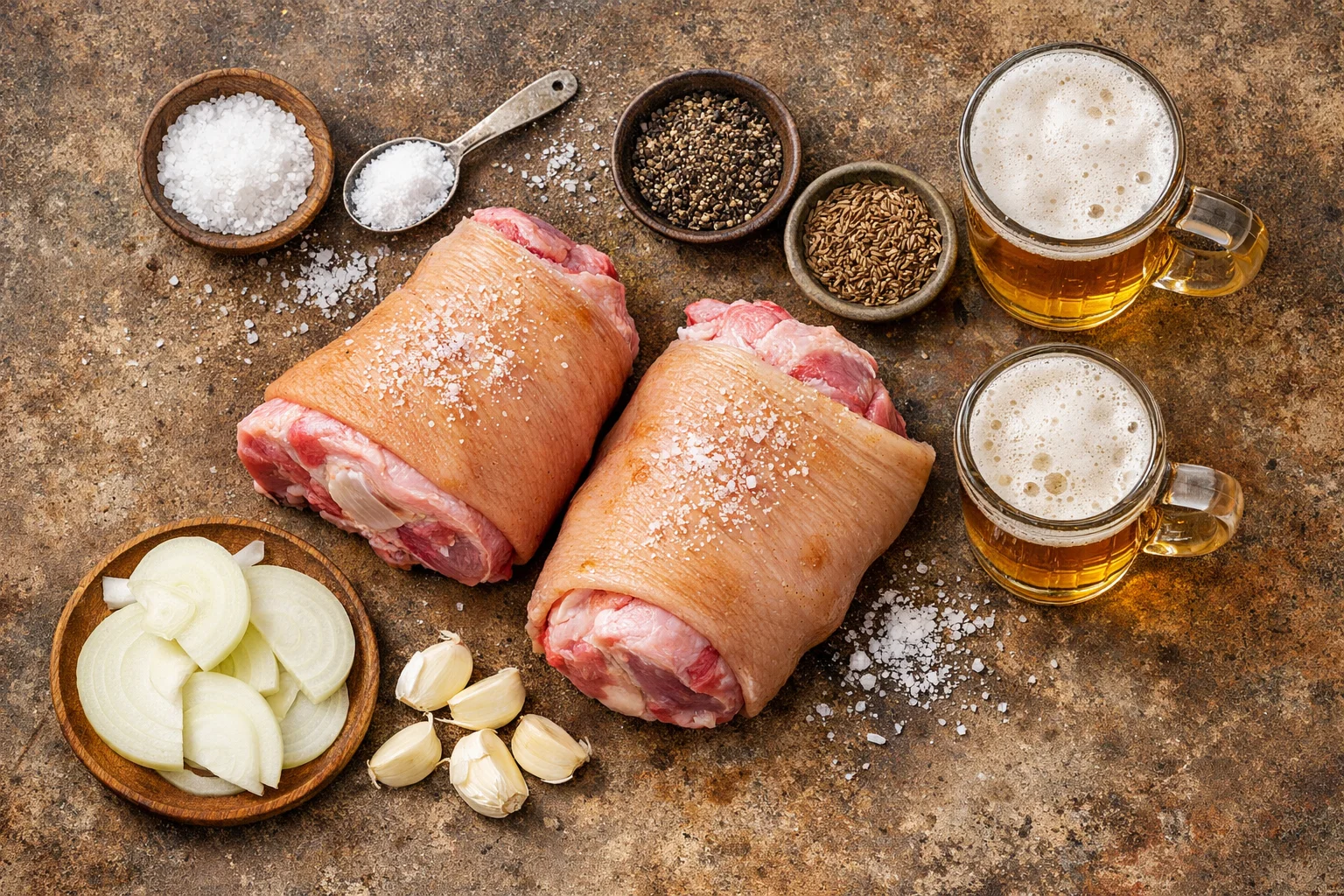
- 2 pork hocks (pork knuckles), skin on
- 1 tablespoon salt, plus extra for the skin
- 1 to 2 teaspoons black pepper
- 1 tablespoon caraway seeds (optional but very classic)
- 1 onion, sliced
- 4 cloves garlic, smashed
- 1 to 2 cups beer (lager is great)
- 1 to 2 cups broth or water
- 1 teaspoon mustard (optional, nice for rubbing on the meat side)
Step by step directions
1) Prep the pork. Pat the hocks dry. Score the skin. Rub salt and pepper all over, and get extra salt right into the scored skin. If you are using caraway, sprinkle it on the meat side.
2) Set up the roasting pan. Put onion and garlic in the bottom of a roasting pan or deep baking dish. Place the hocks on top, skin side up. Pour beer and broth into the pan. You want liquid in the bottom, but you do not want to submerge the skin.
3) Slow roast for tenderness. Cover tightly with foil and roast at 325 F for about 2 to 2.5 hours. Bigger hocks can take longer. The meat should feel tender when you poke it with a knife.
4) Uncover and start crisping. Remove foil. Turn the oven up to 425 F. Roast another 30 to 45 minutes, or until the skin is bubbling and crisp. Rotate the pan once if your oven has hot spots.
5) Rest, then serve. Let it rest 10 to 15 minutes. The skin stays crisp and the juices settle, so do not skip this.
If you want a quick pan gravy, strain the roasting liquid, simmer it for a few minutes, and taste for salt. You can whisk in a tiny bit of mustard or a pat of butter if you are feeling extra.
“I made this for my dad who is obsessed with German food, and he actually went quiet after the first bite. That never happens. The skin crackled and the meat fell apart. Total win.”
By the way, if you love having something warm and simple on the side for another night, this chicken vegetable soup recipe is my go to reset meal after a big roast dinner.
What to serve with Schweinshaxe
Schweinshaxe is rich, salty, and super satisfying, so I like sides that either soak up the juices or bring a little brightness. If you have ever had it at a beer hall, you already know the vibe: hearty and happy.
My favorite pairings:
- Sauerkraut for tang and balance
- German potato dumplings or mashed potatoes for soaking up gravy
- Roasted or braised red cabbage for a sweet and sour side
- Soft pretzels or crusty bread, because why not
- A simple cucumber salad if you want something fresh
If you are serving a crowd, I plan one starchy side, one tangy side, and something green. That keeps the plate from feeling too heavy. And yes, beer at the table feels very on theme, but sparkling water with lemon also works if you want to keep it simple.
Storage And Leftovers
Leftovers are honestly a gift here. The skin will soften in the fridge, but the meat stays flavorful and you can bring back some crispiness with the right reheat.
Here is how I handle it:
Fridge: Store meat in an airtight container for up to 3 to 4 days. If you can, keep the skin and meat together, but do not worry if it separates.
Freezer: Freeze shredded meat for up to 2 months. I usually skip freezing the skin because it will not stay crisp, but the meat freezes great.
Reheat: Warm meat covered at 325 F with a splash of broth or pan juices. For crisp skin, uncover for the last 10 to 15 minutes and bump heat to 425 F.
Leftover ideas I actually get excited about:
- Chop the meat and toss it into fried potatoes with onions.
- Shred it into sandwiches with mustard and pickles.
- Stir it into sauerkraut and warm it like a quick skillet meal.
If you are making Traditional German Pork Knuckle Recipe – Schweinshaxe for the first time, do yourself a favor and cook extra. You will not regret it the next day.
Common Questions
Do I need to boil the pork hock first?
Not always. I usually roast covered with liquid in the pan, which does the tenderizing job. Boiling can work, but you lose some flavor into the water.
Why is my skin not crispy?
Most of the time it is moisture. Dry the skin well, salt it, and do a high heat finish. Also make sure the skin is not sitting in the roasting liquid.
Can I make Schweinshaxe without beer?
Yes. Use broth, apple juice plus broth, or even water with a splash of vinegar. Beer adds a nice malty flavor, but it is not mandatory.
How do I know the pork knuckle is done?
You want tender meat that yields easily when pierced. If you use a thermometer, aim for the meat to be in the 180 to 195 F range for that fall apart texture.
Is pork hock the same as ham hock?
Pretty close. Ham hocks are often smoked or cured. Fresh pork hocks are what I prefer for Traditional German Pork Knuckle Recipe – Schweinshaxe because you control the seasoning.
A cozy final note before you start roasting
If you have been nervous about making Traditional German Pork Knuckle Recipe – Schweinshaxe at home, I hope this makes it feel doable. Dry skin, slow cook, then high heat is the whole game. For extra inspiration, you can compare notes with Crispy German Pork Knuckle (Schweinshaxe) with Beer Gravy and German Pork Hock (Schweinshaxe Recipe) – Plated Cravings, then come back and make it your own. Put on something fun, pour a drink, and let the oven do the heavy lifting. You are going to love that first crunchy bite.